Bush: Removing Saddam Would Help Peace
President Bush, offering new justification for war in Iraq, said Wednesday that "ending this direct and growing threat" from Saddam Hussein would pave way for peace in the Middle East and inspire democracy throughout the Arab world.
Answering critics who say war would destabilize the region, Bush predicted there would be a "new stage for Middle East peace" once Saddam loses power.
Iraq would no longer threaten to dominate the region with weapons of mass destruction, Bush said, and he accused Saddam of financing suicide bombers, a charge Iraq has denied.
"A liberated Iraq can show the power of freedom to transform that vital region, by bringing hope and progress to the lives of millions," Bush said. (Ron Fournier, AP White House Correspondent, 26-2-2003)
Leugens blijven altijd leugens
Commentaar Wim Duzijn 2003
Leugens blijven leugens, ook al schilder je iedereen die je dwarszit af als de vleesgeworden duivel.
Werd eerst de wetteloze kant van het Iraakse bewind benadrukt - 'ze leggen VN-resoluties naast zich neer' (Isra l doet dat al tientallen jaren en niemand maakt zich er druk over..) - nu wordt de antidemocratische gezindheid van het Iraakse bewind in het rechts-zionistische zonnetje geplaatst.
Erg schijnheilig natuurlijk, omdat het conflict in het Midden-Oosten juist het gevolg is van de onwil van rechtse zionisten de staat Isra l om te vormen tot een moderne democratie waarin alle burgers gelijke rechten bezitten.
De reden waarom ze dat niet willen vloeit niet voort uit democratische bewogenheid, maar uit het zionistische verlangen in het Midden-Oosten een zionistische staat te vormen waarin zionisten altijd de macht dienen te bezitten, zodat iedereen die dat zionistische machtsverlangen bedreigt verwijderd dient te worden - via oorlog, etnische zuivering, opsluiting in bantoestans waar men de eigen dorpsburgemeester mag kiezen, of via de import van mensen die het demografische evenwicht in positieve zin (ten gunste dus van de zionisten) kunnen herstellen.
George Bush - president van de grootste democratie ter wereld - schijnt niet te weten wat het verschil is tussen democratie en rechts zionisme.
Hij vertelt ons dat vechten voor rechtse zionisten het verdedigen van de democratie is, hoewel hij zou moeten weten dat het verdedigen van het rechtse zionisme (dat primair etnocentrisch joods nationalisme is) vechten tegen de democratie is: een waarheid die altijd waar zal blijven, ook al worden alle tegenstanders van het zionisme de hel in gejaagd.
Democraten 66:
Het is tijd om man en paard te noemen
"Het beleid van Ariel Sharon is niet alleen contraproductief omdat het niet de vrede maar de oorlog naderbij brengt, maar ook destructief voor het land en de bevolking...
Nederland zou dat duidelijk moeten uitspreken en niet, zoals het lijkt, op verzoek en half besmuikt...
"Het gaat nu om verantwoordelijkheid en actie.
Die actie moet van leiders komen. Arafat kan letterlijk geen kant op. Sharon wel, maar voelt hij zijn historische verantwoordelijkheid? Of wil hij de staatsman zijn die Israel in een nieuwe oorlog stort, zoals hij in hoge mate het Libanese conflict opstookte met de moorddadige inval in Shabra en Chatila in 1982?"
Jan Hoekema, lid van de Tweede Kamer voor D'66, en Marianne Douma, co rdinator mensenrechten van D'66, in de Volkskrant van 12-3-2002.
Free Arab Voice
Interwiew with Tariq Aziz
Info: Tariq Aziz was een Iraaks politicus tijdens het regime van president Saddam Hoessein. Hij was van 1983 tot 1991 minister van Buitenlandse Zaken en van 1979 tot 2003 vicepremier.
Aziz kwam uit een inheemse, oorspronkelijk Assyrische, christelijke familie, behorend tot de Chaldeeuws-Katholieke Kerk. Hij studeerde Engelse literatuur en taalwetenschappen aan het universitair College voor Fijne Kunsten in Bagdad.
Daarna werd hij een overtuigd Arabisch nationalist. Hij wijzigde zijn naam in het meer Arabisch klinkende Tariq Aziz en sloot zich aan bij de Arabische Socialistische Ba'ath-partij.
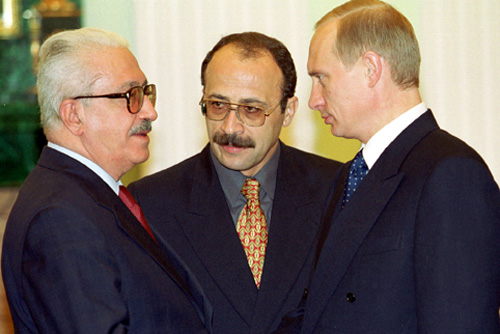 FAV: A question that is posed by lots of supporters of Iraq abroad concerns the issue of democracy. Naturally, we know that the United States uses the rhetoric of human rights and democracy as an argument justifying its political and military interference in various places around the world, not only in Iraq. But, among the forces outside Iraq, among Iraqis abroad, we note that they fall into two main types. One type cooperates with the CIA and others, and no rational person expects Iraq to cooperate with them. Personally, I believe that treason is not just another point of view, and this is the opinion of a lot of people. Anyone who holds hands with the CIA, whoever that may be, is not someone with another point of view, he is a traitor. But on the other hand there are some Iraqis in Syria, for example, and in other places.... I mean we meet Iraqis who say and who consider themselves to be against imperialism and against the American plots against Iraq, but their relations with the regime in Iraq are not good. Don't you think that forces like this must be given the opportunity to take part in repelling aggression on the basis of their opposition to the Americans? I am not proposing, of course, a liberal conception of the matter. But don't you think that there should be some overtures towards these groups?
Tariq Aziz: Since 1991, and until today, we have been ready for dialogue with any person or any group that wants to have a dialogue with us. I personally have had long discussions with people who are Marxists, Arab nationalists, and Islamists. There is, nevertheless, one problem that I must speak about plainly. When one of those people talks with you, if he wants to come to Iraq or to return to Iraq, or work with Iraq and with the rest of the Iraqis, on the basis of his position, or standing, the door is open to him. We don't force him to become a Baathist or to conform one hundred percent to our thinking. But sometimes, mostly for personal reasons, a member of the opposition comes to you - a patriot, no doubt about that - and with him is a group of people, and he is looking for a measure of power that he doesn't really command. But when he comes and asks to be made a partner with the Baath Party in decision making, while he doesn't have the degree of effectiveness, nor does he bear the responsibility that the Baath Party does, such a request is, naturally, unreasonable.
FAV: You mean they make that the precondition for their coming back and cooperating?
Tariq Aziz: No. Some don't make any conditions. And they have come back and worked in the country - each one according to his position: in universities, in the press, in the arts.
FAV: But you don't have any problem in principle, officially?
Tariq Aziz: No, we have no problem. We aren't afraid of anything. As a party, now, let us suppose that our system had been transformed into a liberal regime. Of course, this is just a supposition. But if we had elections, we are sure that we would win more than two-thirds of the seats in parliament. We have no problem.
FAV: But do you have plans in this direction for the future?
Tariq Aziz: Yes, this is possible. Democracy too has to grow gradually. But it must grow in peaceful conditions. (Free Arab Voice, 4-10-2002)
The Free Arab Voice is an independent political newsletter that comes
out only in cyberspace once every few weeks. The Free Arab Voice is critical, analytical, unconventional, and is run completely by volunteers. The Free Arab Voice is the voice of those who are open-minded enough to disagree on some ideological issues, but still know where to draw
the line between patriotism and treason.
Democratie en Zionisme
1: A Definition of Zionism
Zionism, the national movement for the return of the Jewish people to their homeland and the resumption of Jewish sovereignty in the Land of Israel, advocated, from its inception, tangible as well as spiritual aims.
Jews of all persuasions joined to form the Zionist movement and worked together toward these goals.
The term "Zionism" was coined in 1893 by Nathan Birnbaum. (Jewish Virtual Library)
2. Definition of Democracy
In general terms, a democracy is a form of government in which the people have the right to control their own destiny. In a democracy the people have the final authority, they have the right to make or at least influence decisions that affect their everyday lives. The term itself comes from the Greek words demos, meaning "people," and kratos, meaning "authority."
Democratie Is Groot Denken
Commentaar Wim Duzijn 2003
Wie de twee hierboven weergegeven definities goed leest ontdekt dat in de ene tekst (over zionisme) wordt gesproken over 'joodse mensen' terwijl de tweede tekst spreekt over 'mensen'.
Alle ellende in het Midden-Oosten, waarover landen en staten zich momenteel druk zitten te maken, waar we miljarden dollars aan verkwisten en waarvoor we de levens van miljoenen mensen op het spel zetten berust op de tegenstelling 'mensen' en 'joodse mensen'.
In een democratie zijn we allemaal mensen, wie of wat we ook zijn.
Ben je homo? Prima, maar in de eerste plaats moet je mens zijn. Ben je moslim? OK. Maar eerst mens zijn. Dat is de les die een democraat de burgers in een democratisch land geeft.
Draai je de zaak om, zeg je dat je eerst een homo, een moslim of een jood moet zijn, dan ben je een anti-democraat. Je weigert in de ander een gelijke te zien, eigent jezelf een identiteit toe die tot verkleining van de menselijke geest leidt en je werkt derhalve mee aan de vorming van een samenleving van geestelijke lilliputters, die bestuurd wordt door andere lilliputters.
Democratie is juist daarom een zegen voor de mensheid, omdat zij de strijd wil aanbinden met de geestelijke lilliputter, de kleindenker die zichzelf inkapselt in een reeks irrationele denkbeelden en voorschriften, die van hem een contactgestoorde maakt, een blindeman die vanwege de oogkleppen die hij zichzelf heeft voorgebonden niet meer in staat is de mensen die zich naast en achter hem bevinden te zien.
Daarom werpt de democraat alle oogkleppen van zich af en toont hij de burger zijn geestelijke grootheid - een grootheid die de ontkenning is van alle vormen van kleindenkerij, die van de mens een vreemdeling tussen vreemdelingen maken.
Het zal duidelijk zijn dat een echte democraat geen 'zionist' kan zijn, iemand die een staat wil opbouwen die niet het bezit van alle mensen is...

 Wij, de volken van de verenigde naties vastbesloten komende geslachten te beveiligen tegen de oorlogsgesel, die tweemaal gedurende ons leven onuitsprekelijk leed over de mensheid heeft gebracht, en opnieuw het vertrouwen in de grondrechten van de mens, in de waardigheid en waarde van de menselijke persoon, in gelijke rechten van mannen en vrouwen, alsmede van grote en kleine volken te bevestigen, en voorwaarden te scheppen, waaronder gerechtigheid en eerbied voor de verplichtingen, die uit verdragen en andere bronnen van internationaal recht voortvloeien, gehandhaafd kunnen worden, en sociale vooruitgang en betere levensstandaarden in grotere vrijheid te bevorderen
 "Israel's new strategic agenda can shape the regional environment in ways that grant Israel the room to refocus its energies back to where they are most needed: to rejuvenate its national idea, which can only come through replacing Israel's socialist foundations with a more sound footing; and to overcome its "exhaustion," which threatens the survival of the nation.
 A British tabloid newspaper (The Sun) opened a new front in a war of words with France over Iraq on Thursday by attacking Jacques Chirac on his own turf in an edition handed out free in Paris that depicted the president as a giant worm.
 Planeet: Saturnus
 In Josephus, chapter VII, verse 7 we learn the inner most understanding as to why the Ephod was designed in the manner that YHWH commanded. It reads and explains, as such:
 Het Noodlot echter heeft beslist dat onze wereld deel uitmaakt van een planetenorde die niet 'goed' is, maar ook niet 'slecht'. Het is een dualistische orde, waarin goed en slecht naast elkaar bestaan. Het goede 'is', zoals het kwade ook 'is'. Noch het kwaad, noch het goede kunnen elkaar vernietigen, omdat de mens niet goed of kwaad is. Elk slecht mens is gedeeltelijk goed, zoals ook elk goed mens gedeeltelijk kwaad is.
 In this synagogue building, the architects succeeded in creating a place which doesn't lose its suspense. Indeed, it continues to grow the more often we visit it. The glass dome over the prayer room is responsible for this, creating a different impression depending on the time of day.
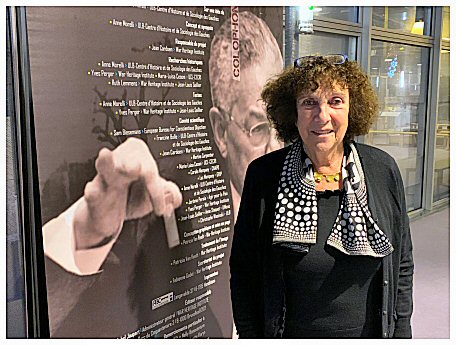 Anne Morelli: Ik heb op een systematische manier de algemene principes willen beschrijven van de oorlogspropaganda. Na de Eerste Wereldoorlog vatte de Britse lord Ponsonby de oorlogspropaganda samen in tien geboden die de publieke opinie ingelepeld moesten worden. Die tien geboden zijn:
 After taking Bush stenography for more than 2 years, White House reporters may be finally awakening from their collective coma.
 Wie ergens voor staat ergert zich aan mensen die nergens voor willen staan, vooral wanneer die principeloze weigeraars net doen alsof ze wel ergens voor staan.
 Saddam Hussein: If the Iraqi army, or any other army for that matter, were to cross the Atlantic and occupy America, will the people of America receive this army with music. I don t think any man in a position of responsibility should say this, because when he does say this sort of thing, it s as if he is preparing his own people to welcome any occupying force invading their country with music and festivities.
 Whatever comes next in the battle against Saddam Hussein, Assistant Secretary of Defense Paul Wolfowitz has achieved a life-long aim.
