The Motives for a Flawed War - Israel's Proxy War?
by M. Shahid Alam, 21-2-2003
 This may not be America's war at all, much less a war of the West against Islam or Islamists.
Instead, could this be Israel's war against the Arabs fought through a proxy, the only proxy that can take on the Arabs? This will most likely provoke derisive skepticism.
Could the world's only superpower be persuaded to fight Israel's war? Is it even possible? Could the tail wag this great dog?
Consider first Israel's motives. Iraq, Iran, Saudi Arabia, Egypt, Syria and Pakistan do not threaten the United States; but they are a threat to Israel's hegemonic ambitions over the region.
This conflict between Israel and her neighbors was written into the Zionist script. A Jewish state could only be inserted into Palestine by resort to a massive ethnic cleansing of Palestinians.
After such inauspicious beginnings, Israel could only sustain itself by keeping its neighbors weak, divided, and disoriented. It has since waged wars against Egypt in 1956; against Egypt, Syria and Jordan in 1967; against Iraq in 1981; against Lebanon, since 1982; and against Palestinians continuously since 1948.
Israel's contradictions have deepened since the mounting of the second Intifada.
When the Palestinians rejected the Bantustans offered at Oslo, Israel chose Ariel Sharon to ratchet its war against Palestinian civilians. Faced with Apaches, F-16s, tanks and artillery, in desperation, the Palestinians turned increasingly to suicide bombings. Sharon's brutal war was not working, and Israel's losses began to catch up with Palestinian casualties.
In April 2002, Israeli tanks reoccupied the Palestinian towns, destroyed Palestinian civilian infrastructure, increasingly placing Palestinians under curfews, sieges, destroying their workshops, stores, hospitals, orchards and farms. This was the new strategy of slow ethnic cleansing through starvation.
But Israel cannot do this alone. This ethnic cleansing can only be implemented in the shadow of a major war against the Arabs, a war to Balkanize the region, a war to bring about regime-change in Iraq, Syria and Iran, a war that only United States can wage.
Israel needs United States to wage a proxy war on behalf of Israel...
This is not to argue that the pro-Israeli lobby is the only reason for the projected US war against Iraq.
At present, there are several forces in United States that are pushing for this war.
Prominent among these indigenous forces are the oil corporations, the arms manufacturers, the aerospace industry, and the right-wing Christian evangelists
However, it is doubtful if these indigenous groups, on their own, could have pushed United States so decisively towards the present catastrophic confrontation with the Islamic world.
[Mohammed Shahid Alam is Professor of Economics at Northeastern University. His last book, 'Poverty from the Wealth of Nations', was published by Palgrave in 2000. ]
Iraq could cost US its leadership
former security adviser
Jordan Times, 20-2-2003
To avoid risking its global leadership the United States should avoid "demeaning and destructive" polemics with its important allies," wrote former National Security Adviser Zbigniew Brzezinski, who served in the Carter administration in the 1970s.
Washington's definition of its war on terrorism, he added, is seen by many abroad as "excessively theological ('evildoers who hate freedom') and unrelated to any political context."
Brzezinski cited the Bush administration's "reluctance to see a connection between Middle Eastern terrorists and the political problems of the Middle East;" its "unsubstantiated efforts to connect Iraq with Al Qaeda;" and its "evident, if unstated, endorsement... of Israeli Prime Minister Ariel Sharon's notions of how to deal with both the Palestinians and the region as a whole."

Russia condemns Washington
for piling pressure on inspectors
By David Usborne in New York, 21-2-2003
Tensions between veto-holding members of the UN Security Council grew yesterday after Russia said pressure was being exerted on weapons inspectors to give a negative assessment of Iraqi compliance or to accept they will have to leave the country soon.
Russia's outburst, which appeared to be directed at the United States, came as Washington and London continued to agonise over the timing and content of a new resolution to authorise disarming Iraq by military means. It is expected to surface early next week.
"Inspectors are being subjected to very strong pressure in order to provoke their departure from Iraq, or to present to the Security Council assessments which could be used as a pretext for the use of force against Iraq," said Igor Ivanov, the Russian Foreign Minister.


 Wij, de volken van de verenigde naties vastbesloten komende geslachten te beveiligen tegen de oorlogsgesel, die tweemaal gedurende ons leven onuitsprekelijk leed over de mensheid heeft gebracht, en opnieuw het vertrouwen in de grondrechten van de mens, in de waardigheid en waarde van de menselijke persoon, in gelijke rechten van mannen en vrouwen, alsmede van grote en kleine volken te bevestigen, en voorwaarden te scheppen, waaronder gerechtigheid en eerbied voor de verplichtingen, die uit verdragen en andere bronnen van internationaal recht voortvloeien, gehandhaafd kunnen worden, en sociale vooruitgang en betere levensstandaarden in grotere vrijheid te bevorderen
 The flower establishes a relation between two souls, it removes distress from the two hearts and soothes two tired spirits. The flower is neither blown over by the wind nor caught in the spider's web!
 When I was 14 or 15 I wanted to be a protest singer like Pete Seeger and Woody Guthrie. My father was a socialist and worked with the unions. I thought change was to change the government and to change from one system, capitalism, to socialism and to make the poor of the world happy. but when I opened the book The Way of Zen by Alan Watts and I opened up the Diamond Sutra, and Lao Tsu s Tao te Ching, I realized that the problem of suffering was much deeper than governments and social problems.

 Protracted military conflict between Iran and Iraq. It officially began on September 22, 1980, with an Iraqi land and air invasion of western Iran, although Iraqi spokespersons maintained that Iran had been engaging in artillery attacks on Iraqi towns since September 4.
 Hoewel Iran momenteel de door het Westen in gang gezette heksenjacht tegen Saddam Hussein probeert aan te wenden om het fanatieke wangedrag van de geestelijke leider Khomeini goed te praten - een theocraat die net als George Bush een streng dualistische scheiding aanbracht tussen goed en kwaad (Amerika was de grote Satan en Saddam de kleine Satan) - leert de geschiedenis ons dat de oorlog tussen Iran en Irak gereduceerd werd tot een hopeloze uitzichtloze slachtpartij vanwege de fanatieke onwil van de Khomeini vrede te sluiten met een man die in zijn ogen 'de Satan' was.
 "You Westerners do not realize that an Arab can do without everything except his dignity. If you touch his dignity he will be as ferocious as a lion."


 Prime Minister Ariel Sharon ruled out giving up any part of Jerusalem in peace negotiations and said Israel would not accept the return of Palestinian refugees, rejecting key Palestinian demands.
 Wie de bijbeltekst hierboven leest, die zal vol verbazing ontdekken dat het bouwen van een protserige, uit steen gehouwen tempel een gruwel is in Gods ogen.
 Planeet: Saturnus
 In Josephus, chapter VII, verse 7 we learn the inner most understanding as to why the Ephod was designed in the manner that YHWH commanded. It reads and explains, as such:
 Right-wing Israeli Prime Minister Ariel Sharon poses a far greater regional threat than Iraqi leader Saddam Hussein, Arab League Secretary General Amr Mussa warned in an interview published on Friday, AFP reported.
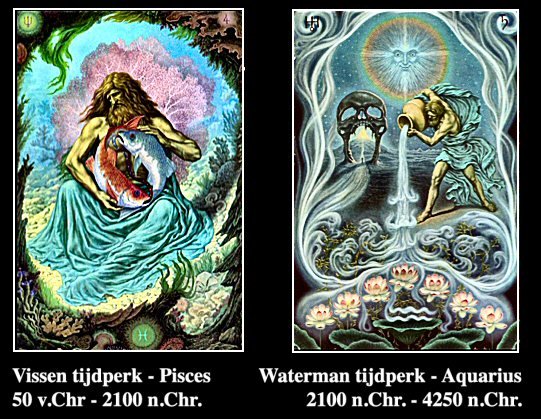 Binnen het New Age-denken staat het idee van een nieuw anti-ideologisch tijdperk centraal: het Watermantijdperk, dat een einde maakt aan het Vissentijdperk (begripen die ontleend zijn aan het astrologische beeld van
 The Leader of the Islamic Revolution, Ayatollah Seyed Ali Khamenei here on Thursday underlined the need for administration of justice in the society, IRNA reported.
 Wie de mensen een juiste, eerlijke en realistische visie op het bestaan wil geven zal er niet aan kunnen ontkomen de wereld in zijn geheel te bestuderen.
 "Israel's new strategic agenda can shape the regional environment in ways that grant Israel the room to refocus its energies back to where they are most needed: to rejuvenate its national idea, which can only come through replacing Israel s socialist foundations with a more sound footing; and to overcome its "exhaustion," which threatens the survival of the nation.
 Natuurlijk zijn er onredelijke, fanatieke extremisten werkzaam aan de kant van de Palestijnen, stokers die elke deal met Israel afwijzen, hetgeen in strijd is met de morele erecode die zij als moslims behoren te verdedigen, een erecode die daaruit bestaat dat je de plicht hebt je agressie te staken wanneer de tegenstander zich bereid verklaart vrede te sluiten, maar ondanks het feit dat de Palestijnen in moreel opzicht soms te kort schieten, kan gesteld worden dat het vooral Israel is geweest dat het moslims onmogelijk heeft gemaakt om op grond van de door de profeet Mohammed voorgeschreven morele erecode het verzet te staken.
 Vrede is alleen maar mogelijk wanneer mensen recht wordt gedaan. De Palestijnen willen dat Israel erkent dat het verdrijven van honderdduizenden Palestijnen een onrechtmatige daad is geweest. Israel weigert dat toe te geven en wijst iedere vorm van verantwoordelijkheid af.
 A British tabloid newspaper (The Sun) opened a new front in a war of words with France over Iraq on Thursday by attacking Jacques Chirac on his own turf in an edition handed out free in Paris that depicted the president as a giant worm.