Vrede sluit je met
de Duivel

vrede is mensen
een gezicht geven


Belangrijke onderwerpen

Hamas & Vrede
Jezus & Barabbas (WD 2002)
A.J. Snel: De Zaak Christus
Melville & Het Kwaad Scheppende Goede
De irrationele logica van Condoleezza Rice
Anet Bleich & De Heilige Oorlog (WD 2002)
Osama El-Sharif: Turning to the right is wrong
Arafat orders end to terrorism - Hamas refuses
Absurdisme in het Midden Oosten
Palestinians and the policy of passive resistance
Sharon versus Netanyahu & the Likud

Yemeni president meets Hamas leader
AP/Ha'aretz, 4-5-2002

Yemeni President Ali Abdullah Saleh on Saturday received a Hamas leader, without asking him to cease suicide attacks against Israelis, the Palestinians said.
According to the official Yemeni news agency, the two men discussed "the aggression and terrorism the Palestinian people are subjected to at the hands of the Israeli occupation troops."
On Thursday, the visiting German deputy foreign minister, Ludger Volmer, told reporters that Yemen would use its good relations with Hamas to persuade the group to "give up suicide operations completely."
Yemen has seen some of the largest pro-Palestinian rallies in the Arab world after IDF troops launched their incursion into the West Bank at the end of March.
Saleh has called on Arab nations to open their borders for Arab volunteers to fight Israel, and to sever relations with the Jewish state.


Hamas & the Islamic State

"Hamas does not recognise the right of Israel to exist. Its long-term aim is to establish an Islamic state on land originally mandated as Palestine - most of which has been contained within Israel's borders since its creation in 1948." (BBC, 19-10-2000)

Commentaar WD 2002:
Vrede is de ontkenning van
op machtswellust gebaseerd fundamentalisme

Wie vrede tot stand wil brengen, zal ook de garantie moeten bieden dat alle bij het conflict betrokken partijen achter het vredesaanbod staan. HAMAS zal (net als Religieus-Zionistisch Israel) de wereld duidelijk moeten maken dat het een vredespartner wil zijn. Wanneer religieus-fundamentalistische, tegen de vrede gerichte machtsprincipes op de eerste plaats worden gezet zal elke daad van de zogenaamde vredespartners een wandaad zijn.


Let us move out of the circle of hate and stereotypes

"Let us learn from the ever legendary Palestinian struggle, always so dignified and always with a lesson to teach. Let us look beyond our differences and search for common ground. Let us quit seeing the world from the spectacles of angry, misguided politicians who see nothing but clashes of religions and civilizations.
Let the sincere souls of this world unite behind principals of justice, humanity, brotherhood and sisterhood. Let us move out of the circle of hate and stereotypes." Ramzy Baroud, Palestine Chronicle, 26-4-2002

Intellect En Menselijkheid
Syria Times, 4-5-2002

Syrian Information Minister Adnan Omran called on Friday for establishing Arab information committed to the Arab issues and characterised by freedom and responsibility. This was said in a joint seminar with his Lebanese counterpart Ghazi al-Aridi held on the sideline of the 28th Book Exhibition staged in Tripoli.
The Minister stressed that Arab information must address the world public opinion, particularly in the most influential countries in the world in order to explain 'our just causes and defend our intellectual and humanitarian values which reject terrorism, occupation and usurpation of rights'.

Bush urges Israelis to find a way to deal with Arafat
By Todd S. Purdum and Judith Miller, New York Times 2002

The White House is making last-minute efforts to persuade the Israeli government that it must deal with Palestinian leader Yasser Arafat even as the Israelis are conducting a sustained campaign to discredit him.
The dueling campaigns come as both sides prepare for a meeting here between President Bush and Prime Minister Ariel Sharon of Israel.
The immediate challenge for Bush, one senior foreign policy aide said, is to "convince the Israelis it's in their long-term interest to deal with Arafat, no matter how reprehensible he may be.'
But in recent days, the Israeli officials have been campaigning to dismiss Arafat and the Palestinian Authority as a plausible negotiating partner, based on documents seized in Israeli raids on the West Bank, and interrogations of about 1,800 Palestinians arrested during the offensive, including senior aides to Arafat.

Jezus & Barabbas
Commentaar WD 2002

Je zou het een daad van rechtvaardigheid kunnen noemen dat George W. Bush de politieke leiding van Israël er op moet wijzen dat een dader niet het morele recht bezit een slachtoffer te veroordelen.
Dat betekent niet dat het slachtoffer 'goed' is, het betekent wel dat het slachtoffer alleen terecht gewezen mag worden door onpartijdige, onafhankelijke anderen, die niet uit zijn op demonisering van de ander.
Israël heeft altijd het optreden van een derde, onafhankelijke partij onmogelijk willen maken. De wereld bestaat uit twee delen: de absoluut goede joden en de absoluut slechte vijanden van de joden.
Niemand binnen het kamp van de 'vrienden' heeft het recht de absoluut goede joden terecht te wijzen. De joden zijn de morele leiders. Zij zijn goed en omdat zij absoluut goed zijn zullen zij degenen zijn die het kwaad in de wereld gaan vernietigen.

Wanneer de Israëlische politicus Shimon Peres stelt dat Israël door niemand in de beklaagdenbank mag worden geplaatst, dan plaatst hij zichzelf aan de kant van het onrecht: het plaatsen van het botte, ideologische onverstand boven het naar eerlijkheid en redelijke argumenten zoekende intellect.
George Bush, die een tijdlang de neiging toonde zichzelf als onvolkomen, zwak, kwetsbaar en zondig mens tot gelijke van God uit te roepen, zal Israël duidelijk moeten maken dat niemand in deze wereld gelijk is aan God.
Israël maakt misbruik van het absurde geloof binnen de rechts-christelijke gemeenschap dat Israël een bijzondere plaats behoort in te nemen binnen het christelijke geloof.
Dat is onzin die berust op het misverstand dat Jezus en Joods nationalisme synoniemen zijn.
Het lijdensverhaal echter laat duidelijk zien (duidelijker kan het welhaast niet) dat Jezus de ontkenning is van het joodse nationalisme.
Toen Joden moesten kiezen tussen Jezus, die een anarchistische bevrijder wilde zijn (wetten zijn van en voor het volk en niet andersom), en Barabbas, die een extreemrechtse nationalistische bevrijder wilde zijn, kozen ze niet voor Jezus, maar voor Barabbas.

"Pilates (de Romeinse landvoogd) ging wederom uit tot de Joden, en zeide tot hen: Ik vind geen schuld in Hem. Doch gij hebt een gewoonte, dat ik u op het pascha een loslate. Wilt gij dan, dat ik u den Koning der Joden loslate? Zij dan riepen allen wederom, zeggende: Niet Dezen, maar Bar-abbas! En Bar-abbas was een moordenaar." (Johannes, 18)

Die vraagstelling ligt momenteel weer op tafel: JEZUS of BARABBAS? Waar kiezen we voor..?
Kiezen we voor extreem rechts nationalisme of kiezen we voor de intellectuele bevrijding van een man die 'het Goddelijke koninkrijk' waarover in het evangelie wordt gesproken in individuele, naar bewustwording verlangende mensen plaatst?
George Bush, de man die binnen zijn geestelijke belevingswereld alleen Jezus als autoriteit erkent zal een keuze moeten maken.
Is Jezus de joodse nationalist Barabbas, waar de joden in het verleden voor gekozen hebben, of is hij de man die het joodse nationalisme afwees.
Kiezen voor Jezus is moeilijk. Maar als je voor Jezus gekozen hebt, dan zul je zijn zaak moeten dienen en niet de zaak van het extreemrechtse nationalisme, die daarom barbaars is, omdat zij de vergeestelijkte (niet-dierlijke) mens (de verstandsmens die universele rechtsprincipes verdedigt) aan het kruis nagelt.


If it has to choose who is to be crucified,
the crowd will always save Barabbas.

Jean Cocteau

A.J. Snel: De zaak Jezus Christus:
Een juridische ontsporing in Judea

Vandaag (red. 30 maart 2002) is het, binnen de christelijke traditie, de zaterdag van de stilte die voorafgaat aan Pasen. Met Pasen wordt door christenen herdacht dat Jezus Christus opstond uit de dood. Voor de zaterdag van de stilte was het, gisteren, Goede Vrijdag, de dag waarop Jezus aan het kruis ter dood werd gebracht. Op de Schedelplaats werd een vonnis voltrokken, dat volgde op een dubbele, juridische wanvertoning in Jeruzalem. Op basis van de juridische maatstaven naar welke ruim tweeduizend jaar geleden werd gemeten, had Jezus niet veroordeeld mogen worden.

De executie aan het kruis vloeide voort uit religieus fanatisme en bestuurlijk gekonkel. De Zaak Jezus Christus, waarvan de uitwerking op de wereldgeschiedenis weergaloos zou zijn, had met het recht heel weinig van doen. Tijdens het proces, dat een kleine tweeduizend jaar geleden uitmondde in de terechtstelling van Jezus Christus, verkwanselden de joodse en de Romeinse autoriteiten hun eigen rechtsbeginselen. Zowel de joden als de Romeinen beschikten over geacheveerde, hoogwaardige rechtssystemen. De joodse autoriteiten negeerden in de eerste fase van het proces de eigen regels. Zij werden gedreven door hun ijver een vermeende religieuze dissident de dood in te jagen. De Romeinse stadhouder en legerbevelhebber Pontius Pilatus liet zich in de tweede fase van de rechtsgang niet leiden door de vraag naar een bewijs van schuld. Hij handelde uit angst dat de openbare orde in Judea ernstig zou worden verstoord.
Tot die conclusies komt J. L. de Wijkerslooth, voorzitter van het college van procureurs-generaal. De hoogste ambtenaar van het openbaar ministerie oordeelt bij beschouwing van het proces rond de persoon van Jezus dat, getoetst aan de regels die bijna twintig eeuwen geleden in Judea golden, sprake is geweest van een dubbele rechtsschending.

"Het recht heeft niet zijn loop gekregen. Aan de kruisiging van Jezus Christus ging een proces vooraf waarbij alle procedures en regels die men toen kende, werden veronachtzaamd."

De naam Israël
Een verwijzing naar Egyptische
en Kanaänitische goden?

Interpretatie 1: "Waarom beweert het boek Job, dat het heil uit de Joden is (Job 4:22)? Omdat de letter Jod de hand symboliseert, die vanuit de hemel schenkt. De Joden, bewoners van Is-Ra-El bevinden zich op het pad van inwijding, dat leidt van Is (de maan), via Ra (de zon) naar God (El)." (Uit: Het bloed van de Koning der Joden)

Interpretatie 2: Is: Verwijst naar Isis, de Egyptische godin van de magie en vruchtbaarheid. Ra: Verwijst naar Ra, de Egyptische zonnegod. En El verwijst naar de Kanaänitische godheid El.

Zie ook: Wikipedia & EL, de vader van de goden


The emergence of Israel in Canaan,
according to archaeology
The Bible and History

The Bible story covering the conquest of Canaan in the Book of Joshua does not correspond to information discovered by archaeologists. This conquest is supposed to have taken place in the second half of the 13th century BCE.
A stele celebrating a victory by Pharaoh Merenptah in 1207 BCE mentions the existence of a human group named Israel in Canaan at that time, but it also confirms the permanent presence of Canaanite cities such as Gezer even though, according to the Book of Joshua, it would have been conquered by the Israelites.
In addition, the text on the stele states that Israel was wiped out. This is of course a rhetorical exaggeration, but it does reinforce the idea that Israel was a small group of people among others living in Canaan, and not the dominant people described in the Book of Joshua.

If the story of the conquest of Canaan is not reliable, historically speaking, what was the origin of Israel? How did this human community arrive in Canaan?
According to the archaeologist Israel Finkelstein, Israel was, at least in part, an indigenous people. Excavations carried out since 1967 have identified several periods of settlement in the Central Hill Country and these have shed light on the issue of the emergence of Ancient Israel.
Finkelstein has identified three phases: a first settlement of populations in the Early Bronze Age, between 3500 and 2200 BCE. These villages and hamlets were then abandoned and resettled in the Middle Bronze Age, between 2000 and 1500 BCE. In this second phase, the network of villages became much denser. Following another abandonment, a third wave of settlement took place in the early Iron Age in the 12th and 11th centuries BCE...
All in all, Israel might have originally been an indigenous people from Canaan or nearby which settled permanently in the Central Hill Country in the early Iron Age without recourse to violence and later coalesced into a kingdom.


Egyptian Relations with Canaan
written by James Wiener, july 7, 2016

In this exclusive interview, James Blake Wiener of Ancient History Encyclopedia (AHE) discusses the exhibition and the countless ties that bound ancient Egypt to Canaan with Dr. Eran Arie, Curator of Iron Age and Persian Period Archaeology
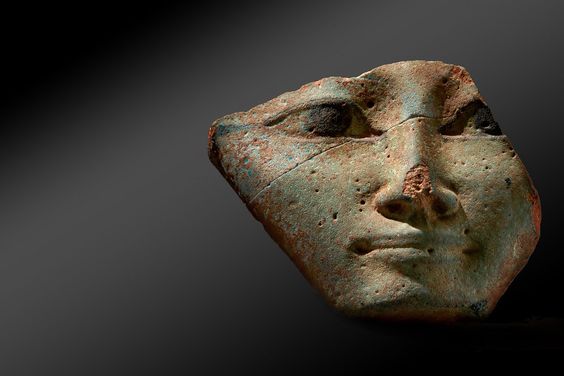

Hathor mask. Timna, 13th-12th century BCE, Faience. Photo by Leonid Padrul-Kwitkowski.
The mutual influences between Egypt and Canaan are not a surprise.
There is no doubt that Egypt was the big empire of that time, and that its culture, with its mature hieroglyphic writing system, was more evolved than the Canaanite culture.

There are many important artifacts in the exhibition that reflect the mutual influences between Egypt and Canaan. Thus, out of the more than 600 objects on display, it is very hard to choose highlights. Most of the artifacts on display were found in excavations in Israel, and they are dated to the Late Bronze Age and Early Iron Age (c. 1500-1130 BCE). All of them reveal the political and cultural relations between these two powers. Here are some highlights from the exhibition in my opinion:

The Great Stele of Seti I
Today, we commemorate military victories by erecting memorials — it was no different in ancient times. This monumental stone, erected in Beth Shean by Pharaoh Seti I (r. 1290-1279 BCE), was designed to immortalize an Egyptian victory over Canaanite forces some 3,300 years ago.
The monument was carved out of local basalt stone by Egyptian artists working in Canaan. Cut into the main part of the stele are twenty-two lines of hieroglyphic script, read from right to left. The inscription begins with a date: “Year One” of the king’s reign, the third month of the summer, the tenth day. The following thirteen lines are devoted to the pharaoh’s titles, and words of praise for his courage and glorious achievements. The last part of the inscription describes the Egyptian victory in the area of Beth Shean.

The Statue of Ramses III
The statue of Ramses III (r. 1186-1155 BCE) was discovered at Beth Shean, which was an Egyptian stronghold at the time of the Bronze Age collapse. His names are inscribed at the shoulders of the statue.
The Egyptian empire had weakened during the reign of Ramses III, but Egypt was still able to maintain its rule over Canaan. This is the only life-size statue of an Egyptian pharaoh ever found in Israel. The statue was carved out of local basalt stone, clear evidence that it was made in Canaan. However, the artistic style tells us that the sculptor was Egyptian.

Column Capitals
Two impressive column bases were found in the central hall of the Egyptian governor’s palace at Beth Shean. The columns placed on these bases were carved of cedar tree trunks and have not survived, but the two capitals belonged to these columns. Capitals of this type, in the form of a splaying papyrus flower, were very popular in Egypt.

A Sphinx Fragment from Hazor
The sphinx is a mythical creature, a hybrid of a lion’s body and a human head. Only the front paws of our sphinx have survived. But with a stroke of good fortune, the name of the Pharaoh Menkaure (fl. 2530 BCE) is carved between the paws. The size of the fragment allows us to calculate the dimensions of the full original sculpture. It would have been about 170 cm (66 in) long, and weighed an estimated half a ton. It was a monumental sculpture, made in a royal workshop in Egypt.
The sphinx was already more than a millennium old when it was given as a valuable official gift to the ruler of Hazor or presented to a local temple. We do not know why this particular sculpture was chosen; but given its enormous weight, we can assume it was sent by sea from Egypt to one of the Mediterranean ports – either Akko or Tyre – and then brought overland to Hazor.

An Egyptian Stele showing veneration of a divine triad
The wonderful state of preservation of the stele allows us to appreciate the bold colors with which it was painted. It is a private Egyptian stele showing veneration of a divine triad.
Surprisingly, two out of the three are Canaanite and not Egyptian gods. The stele is divided into two sections. In the lower section, the scribe Ramose and his wife are seen kneeling in a gesture of veneration toward the three deities depicted in the upper section.
The central deity is the Canaanite goddess Qedeshet, standing naked on the back of a lion. Her figure carries a connotation of eroticism and fertility. On the right is the Canaanite warrior-god, Reshef, who was associated also with healing and fertility. On the left is the Egyptian god, Min-Amun-Ra,

Amerikaanse Schrijver Over
Het Kwaad Scheppende Goede

Citaat: 'Israel's invasion of Ramallah wasn't a victory. It was a defeat for us'. 'It was a defeat for the national and proto-state institutions we have tried to build over the past eight years. It was defeat for the mindless methods of resistance we have adopted. And it was a defeat for the message that we have tried to convey to the world. How was it possible that someone like Ariel Sharon successfully managed to present our people's right to resist a brutal military occupation as terrorism?' (Reactie Palestijnse vrouw in Ramallah, mei 2002)

Commentaar WD 2002

Mensen die snel driftig worden zijn gemakkelijk te manipuleren. Wanneer je ze op een uitgekiende wijze provoceert zijn ze de beste bondgenoten die je kunt hebben. Heb je een rot bui, heb je pest in over iets en wil je een hoop herrie trappen, zonder dat je daar zelf voor bestraft kunt worden, dan gooi je een paar stinkbommetjes in hun tuin, hele simpele plastic bommetjes die nooit als kwaad bewijsmateriaal zullen worden aangemerkt, en je kunt er zeker van zijn dat ze via hun driftige, onverstandige reacties jou in staat zullen stellen al je sadistische driften op hen bot te vieren.
Wat is er heerlijker dan mensen kwellen waarvan je weet dat ze onschuldig zijn? Iets duivelser is er niet en juist daarom, omdat je jezelf tot de grootste duivel die denkbaar is hebt uitgeroepen word je door elke onnozele hals aanbeden als vertegenwoordiger van 'het goede'.
Het is die vorm van moraal die door de Amerikaanse schrijver Herman Melville aan de kaak wordt gesteld in een kleine roman die de eenvoudig naam 'Billy Budd' draagt.
Het is een simpele vertelling die op een overtuigende wijze aantoont dat slechte mensen via het manipuleren van onschuldige, maar erg driftige mensen in staat zijn zichzelf een schijn van goedheid mee te geven, die er toe leidt dat de oneerlijke moralist tot koning wordt uitgeroepen, terwijl de eerlijke driftkop zielloos aan het schandblok hangt.

Wikipedia: Herman Melville
Wikipedia: Billy Budd

UN Workers Protest in Jerusalem for Palestinian Rights
PalestineChronicle, 5-5-2002

The staff of the United Nations Agencies UNDP, UNFPA, UNICEF, WHO WFP, ILO, UNESCO, and OHCHR, in protest against the military incursions of the Israeli government into Palestinian areas in violation of UN resolutions, international humanitarian law and treaties, are holding a sit-in strike at the UNDP offices in Jerusalem.
In a statement released by United Nations staff in Jerusalem, it was stated, "the staff call upon the international community to demand the immediate withdrawal of Israeli forces from Palestinian areas, to demand the implementation of all UN resolutions by the State of Israel and to demand access of the United Nations for the purpose of providing essential humanitarian aid to those in need."


De irrationele logica van Condoleezza Rice

Condoleezza Rice said setting a specific timetable for tackling the most difficult of the issues between the two sides, including contentious Israeli settlements in Palestinian areas, would not be productive at this time.
"We are not going to get ahead of ourselves," Rice said. "We are going to look at where we are. We are going to talk to the prime minister about what he has in mind and then we'll see what the next steps are."
Specifically, Rice said the Palestinian leadership must be "democratic, transparent and non-corrupt... what we ask of every government in the world. And we are going to start demanding [that] of the Palestinian leadership." (Ha'aretz, 5-5-2002)

Commentaar WD 2002

Je kunt je afvragen wat de academisch geschoolde Condoleezza Rice verstaat onder democratie. Mag je de leiding van de joodse staat, een staat die miljoenen (statenloos gemaakte) mensen het recht ontzegt te beslissen over hun eigen lot democratisch noemen?
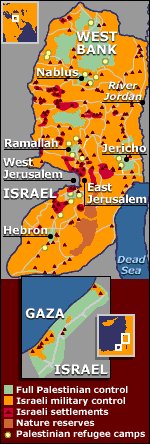
De door Israël bezette gebieden (de staat Palestina in wording) bestaat momenteel uit 3.5 miljoen Palestijnen en driehonderdduizend Israëlische kolonisten.
Wanneer je democratische wetten laat gelden mag je de vraag stellen: Wie heeft meer recht van spreken: de 3.5 miljoen gegijzelde Palestijnen, die gedwongen worden op twintig procent van het Palestijnse grondgebied te wonen? Of de driehonderdduizend kolonisten, die de resterende 80 procent opeisen?
Het is leuk om hete hangijzers in de ijskast te hangen, maar wanneer dat uitstel geweldexplosies in de regio veroorzaakt, dan zul je wel moeten erkennen dat jouw morele lafheid daar de oorzaak van is.

Waarom, zo moeten we ons eindelijk eens gaan afvragen zijn moralisten zo gruwelijk traag en lui wanneer het aankomt op het beantwoorden van werkelijk belangrijke morele vragen? Waarom noem je jezelf moralist wanneer je weigert in fundamentele kwesties, die een morele stellingname van je eisen, moreel te zijn?
Je kunt de moraal niet in een oneindig verre toekomst projecteren. Je kunt niet zeggen dat de moraal vandaag niet ter zake doet. Dat is het grote bedrog van de kleinburgerlijke moraal. Werkelijke morele vraagstukken onder de tafel schuiven. Niet gewoon stellen dat recht 'recht' is, maar zaniken en zeuren over onbeduidende bijzaken, die uiteindelijk alleen maar leiden tot het ontstaan van dood, ziekte en ellende..., en uiteindelijk (wat mogelijk ook de bedoeling is) van de vernietiging van het recht..


Sharon's Peace Plan
Pattrick Johnson, PalestineChronicle, 6-5-2002

The Israeli plan for peace is corralling and penning the entire West Bank. The Gaza Strip is already completed. In essence the Palestinians will be confined in a big escape proof, freedom robbing compound - zoo if you like - at the bemusement and satisfaction of Sharon and those Israelis that will undoubtedly endorse his plan, calling it 'security' and 'peace' from the rutalities of the Palestinians...

The Sharon Plan calls for the large outer perimeter fencing and security measures exacted from Palestinian territory. The remaining West Bank will become a bridged territory for the Palestinian people.
A non-contiguous territory fragmented by numerous (and expanding on an escalated and prioritized process) Israeli settlements - excuse me, 'subdivisions'. Sharon will not dismantle any of the settlements and will not withdraw from any of the territories.

His plan calls for all settlements to be protected and integrated by this massive fencing scheme and the building of tunnels to allow the Palestinians to get between the non-contiguous zones.
There will be the need for additional expropriation of land to integrate all of the settlements and the increasing of the Jews only bypasses and roadways.
Central to this plan will be a massive military and police buildup ecessary to provide security for this massive prison.

Cost and payer? Any reasonable expectation would be in excess of 20 billion dollars, with guarantees of yearly aid increases from the American taxpayer to Israel to pay for the increased military and police security measures.

Anet Bleich & De Heilige Oorlog
Commentaar Wim Duzijn 2002

Anet Bleich werkt voor de Volkskrant. Zij behoort tot een generatie die nooit enige werkelijke principes heeft verdedigd: de jaren-zestig-generatie (ook wel de Babyboomer generatie genoemd).
Die generatie heeft ons geen principes geschonken, maar opportunisme. Men strijdt niet voor principes, maar voor het eigen gelijk, niet omdat gelijk hebben moreel juist is, maar omdat gelijk hebben morele onzekerheid uitsluit, in een tijd waarin de massa het voor het zeggen heeft.
Gelijk hebben en moreel bezig zijn worden in een primitieve, anti-intellectuele wereld altijd met elkaar verward. Gelijk hebben is het principe van de macht. Het is dat principe dat het werk van de schrijver Willem Frederik Hermans bij tijden onleesbaar maakt. Hermans (astrologisch gezien een man die sterk onder invloed stond van de bazige, tirannieke tekens Leeuw en Schorpioen) benadrukte in zijn polemieken voortdurend 'het eigen gelijk'. Hij schreef in feite ook om te winnen - een heilloze gedachte, die in strijd is met het eerlijk willen zoeken naar moraal...
Werkelijke moraal wil niet winnen. Werkelijke moraal sluit winnen niet uit, maar is ook bereid zichzelf tot verliezer uit te roepen, wanneer erkenning van de nederlaag in dienst staat van de moraal.
In de artikelen van Anet Bleich komt het woord 'verliezen' niet voor. Nooit wil zij afstand doen van onzinnige idealen en principes in dienst van de moraal.

Anet Bleich studeerde politieke wetenschappen aan de Universiteit van Amsterdam (UvA). In 1969 en 1970 was ze tijdens haar studie lid van de Werkende Jongeren Groep, die ontstaan was binnen de linkse studentenbeweging van de universiteit. Behalve Anet Bleich was ook haar partner Max van Weezel lid van deze groep. Ze was van 1972 tot 1977 lid van de Communistische Partij van Nederland (CPN).

In de jaren zestig en zeventig verdedigde zij het marxisme en de Duitse Democratische Republiek (een nep-democratische staat die geterroriseerd werd door zich 'democratisch' noemende communisten).
Toen het communisme viel ging ze op felle wijze tekeer tegen diegenen die het communisme veroordeelden. "De kleinburgers komen uit hun holen gekropen", schreef zij in de Volkskrant, die het natuurlijk van harte met haar eens was.

Anet Bleich koos echter niet voor het verdedigen van de democratie. Toen de DDR viel stapte zij over op de trein van een andere ideologische groepering: de zionistische nepdemocratie (een democratie die niet het bezit is van 'het volk', maar van 'het joodse volk').
Zij verdedigt in haar artikel haar geloof in de juistheid van 'de joodse staat', een keuze die je rustig kleinburgerlijk kunt noemen, omdat het geen rationele keuze is.
Nu zal het mij een zorg zijn waar Anet Bleich in gelooft - ik krijg ook regelmatig Jehova-getuigen aan de deur en elke keer neem ik geduldig het blad De Wachttoren in ontvangst, waarin wordt beschreven hoe de God Jehova alle ongelovigen zal vernietigen met behulp van pek, zuur en zwavel - maar wat ik haar wel kwalijk neem is het feit dat zij zichzelf in een zich 'links' noemende krant presenteert als rechtse kletstante.
Een joodse staat, die niet gebouwd is op rationele principes, is een extreemrechts idee, dat alleen door extreemrechtse mensen verdedigd mag worden. Maar wil Anet Bleich extreemrechts zijn..?

Het begrip 'joodse staat' is een heilige koe geworden en degenen die dat idool aanvallen worden nog altijd beschouwd als negatieve ketterse zonderlingen die niet begrijpen hoe zielig 'de arme jodenmensen', die 'noodgedwongen' deze keuze hebben gemaakt, wel niet zijn.
Wat Anet Bleich niet snapt is dat mensen die een heilige koe omarmen en daar voor strijden bezig zijn met het voeren van een heilige oorlog, en dat is een zaak die ze in haar Volkskrantartikel veroordeelt.
En dan kan mevrouw Bleich wel zeggen dat zij echt heel erg principieel tegen het voeren van heilige oorlogen is, maar dan begrijpt zij niets van zichzelf en haar primitieve verlangen zichzelf uit te leveren aan dwaze utopisten met nepdemocratische opvattingen.
Wie altijd achter sterke mannen heeft aangesjokt: eerst Stalin, omdat hij toch maar 'het socialisme; verdedigde.., en nu Sharon, omdat hij, hoe wreed zijn gedrag ook is, toch maar 'het zionisme' verdedigt..., die moet niet op vals-moralistische wijze andere mensen tot de orde proberen te roepen.
Waarom zou je tegen andere mensen zeggen dat ze niet hun toevlucht moeten zoeken tot een heilige oorlog? De strijd van de joden voor een exclusief joodse staat die het bezit is van joodse mensen is een heilige oorlog.
Wanneer je dus tegen de heilige oorlog bent dan is het je taak het irrationele idee van een tribalistische staat belachelijk te maken.
Maar ja, dan moet je wel eerst van je geloof afvallen en als Anet Bleich iets niet wil zijn, dan is het een afvallige, een ketter, een enkeling, een mens zonder geloof.

Alleen de enkeling, die zich realiseert dat we allemaal enkelingen zijn, is in staat de strijd aan te binden met collectivisten die heilige oorlogen willen voeren. Dat is de reden waarom de filosoof Friedrich Nietzsche dergelijke enkelingen 'Heren' noemt.
Wanneer Anet Bleich dus serieus genomen wil worden, dan zal zij de vale, goedkope boezeroen van het collectivisme moeten inruilen voor een koninklijk gewaad dat van haar een 'Dame' maakt. (Zwolle, 6 mei 2002)

UN Calls for International Protection Force
for Palestinians, Israelis
PalestineChronicle, 6-5-2002

The team that was set to investigate the potential war crimes committed in Jenin is now calling for international protection to be deployed to the area.
The team was dismantled by UN Secretary General Kofi Annan, as a result of Israeli non-compliance with the mission. Isreal claimed that the team would find Isarel solely responsible and their findings would not be objective and "balanced".
In response to the dismantling of the team, Cornelio Sommaruga, a former head of the International Committee of the Red Cross, sent a letter to Secretary General Annan, stating that there was a great need for permanent peace-keeping forces to protect both Palestinians and Isarelis.

Turning to the right is wrong
Osama El-Sharif, PalestineChronicle, 4-5-2002

Today right wing policies are becoming mainstream in Israel, the United States, Britain, Austria and elsewhere. Shocking but true: The world is veering precariously to the right.
More and more conservative policies are becoming appealing to a greater number of people. If not people, then their governments: Extreme ideas and policies are finding more supporters in unexpected places.
Even governments that are considered leftist, liberal or centrist are beginning to ponder certain policies that were once considered the pride of ultra nationalist or conservative political trends.
Britain's Labor government is adopting the same militant stand of the Bush administration on Iraq, for example, with no consideration to the human cost of an unjustified attack against that country.
Israel's extremist and racist coalition government is getting away with cold blooded murder and a number of its ministers who are calling for the purging and transfer of Palestinians have popular support in the street. It is unlikely that the extremist mood of the Israeli public will change in the near future.

In the midst of all this, Arab regimes are asked to remain moderate and fight extremism at home, even if this means resorting to more undemocratic practices and infringement on human rights.
We are asked to denounce legitimate Palestinian resistance to occupation as pure terrorism, rewrite school and history books and rethink our religious beliefs in order to vindicate ourselves from the charges of radicalism and fanaticism.
Yet we see US and Israeli policies becoming more fanatical and extreme every day.
We are asked to be moderate in our thinking when crimes against humanity in Palestine go unchecked and its perpetrators are celebrated as men of peace.

It is a sad fact that Arab public opinion is never measured accurately through polls and the ballot box.
Aside from angry demonstrations, which are confronted with political and military resolve, the world does not really know what the Arab people are really thinking.
But we know that Arabs are infuriated and disgusted by unfair policies. We know that they too are turning to the right, not because of globalization, but because they see their cause, their religion and their beliefs being misrepresented and unjustly opposed by America and its allies.

Whether it is patriotism or fanaticism the world is witnessing the reverse of globalization in the broader sense.
Tribalization and xenophobia are digging roots in today's world of hi-tech communication where barriers are supposed to fall and our planet is called a global village.
But today people are drifting apart and jingoistic sentiments are taking over.
The veering to the right is wrong because it will spell disaster for humankind, which should remember too well the bitter lessons of the 1920s and 30s.

Bush sending CIA chief back to Mideast to rebuild PA security force
By Nathan Guttman and Aluf Benn, Ha'aretz 7-5-2002

President George Bush announced Tuesday that he was sending CIA director George Tenet back to the Middle East to work on rebuilding a unified Palestinian security force.
Bush, who was speaking to reporters along with Prime Minister Ariel Sharon after their meeting at the White House, also outlined a series of reforms which he said the Palestinian Authority had to undertake, and which he said he had discussed with the Israeli leader.
"I think it is very important that there be a unified security force, but at the same time we need to work for other institutions, a constitution for example, development of a state that can help bring security and hope to the Palestinian people and the Israelis," Bush said.
The security force, the president added, should be a unified one that is "held accountable."
Spefically, Bush said that the PA must have "transparency, rule of law, and a treasury capable of fighting corruption."
Asked whether he had changed his mind regarding the creation of a Palestinian state, Bush replied: "I haven't changed my opinion."

Arafat orders end to terrorism
By Hadeel Wahdan, Harald Sun, 8-5-2002

In a televised address, Arafat today ordered his security services to prevent "terror attacks against Israeli civilians".
"I gave my orders and directions to all the Palestinian security forces to confront and prevent all terror attacks against Israeli civilians from any Palestinian side or parties and at the same time to confront any aggression or attack on Palestinian civilians, whether by Israeli soldiers or settlers, which we all condemn," he said on Palestinian television.
However, Arafat said, his police were too weak to carry out his orders in the wake of Israel's large-scale military operation aimed at crushing Palestinian militias in the West Bank.
He appealed to the United States and the international community to help support his forces so they could implement his orders.


Hamas leader Khalid Meshal affirmed the continuity of Intifada
until Israel's occupation forces leave Palestine
Yemen Times, mei 2002

A top official with Hamas, the group known for its support of the Palestinian Intifada through suicide bombings, told a Yemeni audience that such martyrdom killings are necessary and Arabs should not let international pressure convince them of otherwise.

Suicide bombings are carried out by all Palestinian groups and not only Hamas and Jihad movements. Yet, Arabs should not be hasty in judging them under US pressure, said
Khalid Meshaal, head of the political division of Hamas movement.
Meshaal, based in Qatar, made his comments while at a press conference at the Taj Sheba Hotel here. He stressed that the Palestinian people are ready to die honorably and that the suicide bombings are necessary for striking a balance with the Israelis amid the weakness of Arab countries.

Responding to a US-based report that president Ali Abdullah Saleh requested Hamas to quit suicide bombings, Meshaal said that Saleh hasn t asked for a stop to such bombings, but the president asked Hamas to unify its lines with the other Palestinian groups fighting Israel.
He affirmed the continuity of Intifada until Israel's occupation forces leave Palestine.
The Palestinian people have tried negotiations but to no avail, Mesha al also said, adding that the Palestinian people and Hamas movement adhere to national unity as a strategic choice.

Mesha al made it clear that Palestinians don t need more Arab conferences and summits because they have made its strategic choice to resist the Israeli occupation.
He said to end resistance as a gesture to get officials back to the negotiating table will not happen because Hamas believes that will dispirit Palestinian resistance and shake its national unity.


Hamas leader vows to continue attacks against Israel
AP/Ha'aretz, 9-5-2002

The spiritual leader of Hamas vowed in an interview Wednesday that attacks against Israel would continue.
Sheik Ahmed Yassin said Israel's military operation in the West Bank had not crippled the organization, which took responsibility for scores of deadly attacks in 19 months of fighting.
"The operation they carried out in the West Bank has failed and will not bring them security," Yassin said in an interview with The Associated Press.
"The Palestinian people will continue the armed struggle and resistance as long as occupation exists on our land," the blind and paraplegic Yassin said. "We fear God only and we don't fear the aggression."
Yassin said the Palestinians had no other means of defense in facing the Israeli military offensives than attacking Israelis.
"When they harm and hurt Palestinian civilians their civilians will be harmed," he said. "Sharon began this war and this is a normal reaction to the Israeli massacres against Palestinians."

UK agents to help Arafat stop suicide bombers
Independent.co.uk, 9-5-2002

Britain is to send intelligence and security experts to the Middle East to help the Palestinian Authority to root out hardliners plotting fresh suicide attacks in Israel.
The move was approved yesterday by Tony Blair after the bombing of a billiard hall near Tel Aviv, in which 16 people died.
The team of about 20 is expected to be drawn from the police and security services and will advise the Palestinian leader, Yasser Arafat, on how to prevent future attacks by groups such as Hamas. Mr Blair will hold talks on the make-up of the delegation with the US and European Union.
He said: "We are prepared to work with the Palestinian Authority in any way which is possible to make sure they have the proper security apparatus that they require and that that is properly enforced throughout the Palestinian Authority.
"We cannot have a situation where every time it seems as if there is some hope of political progress then that progress is immediately derailed by a terrorist attack."
The Prime Minister's official spokesman stressed last night that Britain was not considering sending troops to the region. (independent.co.uk, 9-5-2002)


Commentaar WD 2002:
Maandenlang is de regering Sharon bezig geweest met het verzwakken van het gezag van de Palestijnse Autoriteit en het versterken van het gezag van groeperingen als Hamas en Jihad. We stonden er bij en we keken er naar.
Waarom keken we zwijgend toe? Wilden we Israel laten winnen? Onrecht stilzwijgend toelaten om van alle moeilijke vragen af te zijn?
Het lijkt er wel op. Nu sturen Amerika en Engeland adviseurs naar Arafat die het door Israel vernielde veiligheidsapparaat weer op moeten bouwen. Maar troepen worden niet gestuurd, omdat het sturen van troepen betekent dat Israel zijn averechts werkende wraakmoraal overboord moet zetten, een moraal die zich weerspiegelt in de primitieve wraakmoraal van Hamas en Jihad.

Israel called up reservisten
The Miami Herald, 10-5-2002

Israel called up reservists just hours after the Knesset approved a military strike on Hamas bases. But weakening Hamas will be difficult.
The group's popularity has soared as many Palestinians have given up hope of negotiating peace with the Israeli government of Prime Minister Ariel Sharon. Many Palestinians also are disillusioned with Arafat's Palestinian Authority, which is widely considered to be corrupt and inefficient.
Israel's recent military offensive in the West Bank -- ''Defensive Shield'' -- killed and captured scores of Hamas militants and shattered the Palestinian Authority's infrastructure and its security forces, weakening Arafat. Israeli airstrikes last year also destroyed dozens of Palestinian Authority buildings in Gaza, but Hamas' infrastructure survived.


Hamas official: Armed resistance "only chance" against Zionists
Berlin, May 10, IRNA

A Hamas spokesman vowed that armed resistance against the Zionist regime was the "only chance" ruling out any kind of compromise with the `murderous' Jewish state.
"Following 10 years of peace process, we see our only chance in the resistance against Israeli aggression," Abdul Aziz Rantissi was quoted as saying in a brief interview with the daily Frankfurter Rundschau.
"At that time we were promised that the Gaza Strip would turn into another Singapore, instead there was only massacre and destruction," Rantissi added.

Absurdisme in het Midden Oosten

U.S. pressing Arafat to start thorough reform process
By Nathan Guttman and Aluf Benn, Ha'aretz 10-5-2002

The United States has asked Arab states to press Palestinian Authority Chairman Yasser Arafat to start a reform process that would culminate in a Palestinian constitution, new political institutions, and possibly a prime minister alongside Arafat.
President George Bush told reporters at the White House yesterday that Arafat had disappointed Palestinians by his lack of leadership. It was therefore necessary to build new institutions that would enable a Palestinian state to be a peaceful neighbor. However, he said he is not working to oust Arafat, and he denied Israel's claims that he had agreed to push the Palestinian leader aside.


Anachronism in the Likud
No Palestinian state alongside Israel
Ha'aretz Editorial, 10-5-2002

The Likud Central Committee is slated to meet on Sunday with an agenda that includes a proposed resolution against the establishment of a Palestinian state.
The decision is meant to require Likud representatives in the government, including Prime Minister Ariel Sharon, to foil any political move that might lead to the establishment of a Palestinian state alongside Israel.
The resolution is meant to establish a binding principle and be permanent. If Ariel Sharon does not manage to prevent the debate and vote on the resolution, the members of the Likud Central Committee will be responsible for a disastrous policy. National history will remember them as bringing calamity to the state, endangering its development, if not its actual existence.

The national Palestinian demand for political independence and sovereignty is accepted by the entire international community, and is anchored in moral imperative, norms of behavior between nations, and decisions of past Israeli governments. The ruling party's decision to turn its back on this consensus is an expression of emotional outrage, outdated ideological zealotry, and a worrisome failure in the ability to perceive reality and foresee events.

Commentaar WD 2002:

Een objectief waarnemer kan alleen maar stellen dat hier iets absurds gebeurt.
Yasser Arafat wordt gedwongen hervormingen door te voeren die er toe moeten leiden dat er een moderne, democratische staat Palestina ontstaat met een moderne constitutie.
Maar tegelijkertijd proberen Likud-leiders (vertegenwoordigers van een staat die geen moderne constitutie bezit) op grond van ouderwetse, anti-democratische opvattingen, de vorming van een Palestijnse Staat onmogelijk te maken.
Uiterst merkwaardig, omdat het hier niet gaat om een kleine groep extremistische kolonisten, maar om een van de grootste politieke partijen van het land.
Het zal duidelijk zijn dat de onwil van Likud een duidelijke keuze ten gunste van de democratie te maken de pogingen van Amerika hervormingen tot stand te brengen doorkruisen.
Hamas, een politieke beweging waar rekening mee gehouden moet worden, wil de zekerheid hebben dat de bezette gebieden worden ontruimd. De onwil die zekerheid te verschaffen resulteert in zelfmoordaanslagen die via de benaming 'terreur' slecht worden gemaakt, een moreel onjuiste daad, omdat de onwil van Likud de Palestijnse democratische rechten (eigen staat of Israëlisch staatsburgerschap) te erkennen hier het grote kwaad is.

Peres Says Palestinian State Inevitable
PalestineChronicle, 12-5-2002

Israeli Foreign Minister Shimon Peres says a Palestinian state is "inevitable" and that the sooner it is established, the better. Peres said the Israelis need the Palestinians to be organized in their own state so Israel can remain a "Jewish and democratic country".
He said Israel may have been mistaken in not offering the Palestinians an independent state earlier. The Israeli foreign minister made those comments Saturday in Rome during an interview with CNN.
However, he blamed Palestinian leader Yasser Arafat for not "preventing terror", and said he expects Arafat to abide by the Oslo agreements that committed the Israelis and Palestinians to work out differences by dialogue.


Arab Leaders Wants Peace
Palestine Chronicle, 12-5-2002

Leaders of Egypt, Syria and Saudi Arabia have expressed an Arab desire for peace with Israel and have rejected all forms of violence.
An Egyptian official said Egypt's President Hosni Mubarak, Syrian President Bashar Assad and Saudi Arabia's Crown Prince Abdullah voiced those sentiments while meeting at the Egyptian resort of Sharm el-Sheikh.
President Assad later returned to Damascus, while President Mubarak and Crown Prince Abdullah, Saudi Arabia's de-facto ruler, are expected to meet again Sunday.
Saturday, the leaders discussed a joint approach to the Middle East crisis, including a revival of Israeli-Palestinian peace negotiations. They were also expected to discuss a U.S. proposal for a Middle East peace conference.

Palestinians and the policy of passive resistance
By Sherri Muzher, for Palestine Chronicle, 2002

While international law sanctions armed struggle, it has become increasingly clear that Palestinians need to emphasize the concept of Satyagraha as a potential cure to the disease of occupation.

Satyagraha is the policy of passive resistance as a method of gaining social and political reforms.
Inaugurated by Mahatma Gandhi in 1919, Satyagraha has been seized upon to describe many forms of opposition to government, and to explain almost any direct social or political action short of organized violence.
This may well be an effective way to Palestinian freedom. It will certainly reduce the number of deaths. And nobody has more of an interest in reducing deaths than Palestinians, who have lost more than 1,700 people during the last 20 months of the Palestinian uprising for freedom. Not to mention the nearly 25,000 who have been wounded.

Satyagraha is greatest patience and brightest faith. Palestinians have withstood 35 years of Occupation with the sort of dignity and patience symbolic of Satyagraha. Their faith in themselves and in a better future has been unwavering.
Let the momentum of Satyagraha continue to build in the name of strategy and most importantly, in the name of Palestinian humanity.


Ghandi & The Seven Deadly Sins

Mahatma Gandhi said that seven things will destroy us. Notice that all of them have to do with social and political conditions. Note also that the antidote of each of these "deadly sins" is an explicit external standard or something that is based on natural principles and laws, not on social values.

Wealth without work
Pleasure without conscience
Knowledge without character
Commerce (business) without morality (ethics)
Science without humanity
Religion without sacrifice
Politics without principle


Gandhi and non-violence

Gandhi did not claim to be a prophet or even a philosopher. "There is no such thing as Gandhism," he warned, "and I do not want to leave any sect after me." There was only one Gandhian, he said, an imperfect one at that: himself.
The real significance of the Indian freedom movement in Gandhi's eyes was that it was waged non-violently. He would have had no interest in it if the Indian National Congress had adopted Satyagraha and subscribed to non-violence.
He objected to violence not only because an unarmed people had little chance of success in an armed rebellion, but because he considered violence a clumsy weapon which created more problems than it solved, and left a trail of hatred and bitterness in which genuine reconciliation was almost impossible.


Gandhi about the Jews in Palestine, 1938
Kamat Website Info<

And now a word to the Jews in Palestine. I have no doubt that they are going about it the wrong way.
The Palestine of the Biblical conception is not geographical tract. It is in their hearts. But if they must look to the Palestine of geography as their national home, it is wrong to enter it under the shadow of the British gun.
A religious act cannot be performed with the aid of the bayonet or the bomb.
They can settle in Palestine only by the goodwill of the Arabs. They should seek to convert the Arab heart.
The same God rules the Arab heart, who rules the Jewish heart. They can offer satyagraha in front of the Arabs and offer themselves to be shot or thrown in to the Dead Sea without raising a little finger against them. They will find the world opinion in the their favor in their religious aspiration.
There are hundreds of ways of reasoning with the Arabs, if they will only discard the help of the British bayonet.
As it is, they are co-sharers with the British in despoiling a people who have done no wrong to them. (Mahatma Gandhi, Mid-East 1938)

Saudi Says Arabs Are Pressuring Palestinians
By Howard Schneider, Washington Post Foreign Servic, May 11, 2002

In an effort to bolster new U.S. peace initiatives, Saudi Arabia and other Arab states have begun pressing Palestinian leader Yasser Arafat to stop suicide bombings and other attacks against Israelis, the Saudi foreign minister, Prince Saud Faisal, said today.
Saud said that the Saudi leader, Crown Prince Abdullah, concluded after meeting with President Bush at his ranch in Texas last month that Bush was ready to make a credible push to rejuvenate the peace process after 19 months of violence.
In "constant" calls, Saudi officials have been telling Arafat and Palestinian officials that if the U.S. initiative is to take hold, the activities of groups such as the Islamic Resistance Movement, known as Hamas, and Islamic Jihad must be curbed, Saud said.

"We all have been counseling that these efforts [suicide bombings] are not helpful to the peace process..
Everybody is in constant contact," Saud said. "The U.S. can pursue the vision and restrain Israel… The Arab countries have to make clear that their pursuit of peace is unfettered… Violence has to stop on both sides."


Sharon versus Netanyahu
Mordechai Taub: "A Likud that does not fight against
a Palestinian state is a Likud without ideology"
Jerusalem Post, 12-5-2002

Prime Minister Ariel Sharon is to decide today on a strategy for avoiding potential embarrassment in Sunday's Likud central committee meeting at Tel Aviv's Mann Auditorium, which is expected to approve a resolution opposing the creation of a Palestinian state.
A poll of central committee members published in the magazine Uvdot that is distributed among the members found that 71 percent oppose the formation of a Palestinian state, although 83% believe one will eventually be formed anyway.

Central committee member Mordechai Taub, a Netanyahu supporter, described Sunday's event as the most important central committee meeting in Likud history.
"On Sunday, we will determine the party's soul," Taub said. "Will we continue to be the party of Jabotinsky, Begin, Shamir, and Netanyahu, or will we be a mere vessel for any opportunist without ideology who decides to enter politics?
A Likud that does not fight against a Palestinian state is a Likud without ideology." (Jerusalem Post, 12-5-2002)

Likud Central Committee rejects Palestinian state
By Yossi Verter, Ha'aretz 12-5-2002

Prime Minister Ariel Sharon suffered a painful political setback Sunday night at the hands of his rival, former prime minister Benjamin Netanyahu, when the Likud Central Committee adopted a resolution completely rejecting the creation of a Palestinian state.

At a raucous meeting in Tel Aviv, Sharon and Netanyahu went head-to-head over whether the party should vote on the resolution calling for the complete rejection of a Palestinian state. A proposal by Sharon to postpone the vote was defeated in a secret ballot by 669 (59%) to 465 (41%) votes.
Sharon desperately tried to prevent the vote, arguing that it would precipitate international pressure on Israel and tie his hands diplomatically.
"Any decision taken today on the final [status] agreement is dangerous to the state of Israel and will only intensify the pressures on us," Sharon told those gathered at the Mann Auditorium, prior to the vote.
His proposal was met with a chorus of boos.

Peres says Likud rejection of Palestinian state 'tragic'
By Ha'aretz Service, 13-5-2002

Foreign Minister Shimon Peres said Monday that the Likud Central Committee's overnight decision ruling out the possibility of a future Palestinian state was "tragic, tragic to the state of Israel."
The vote was a painful political - and perhaps diplomatic - setback to Prime Minister Ariel Sharon Sunday night at the hands of his rival, former prime minister Benjamin Netanyahu.

Peres dismissed as "words, words, words devoid of meaning" Netanyahu's vision of self-rule rather than Palestinian independence.
"If they're under our sovereignty, we control their economy, their villages, their lives, their houses, and in any case they'll react as they are reacting. We must not delude ourselves. All in all, verbal therapy is an extraordinary thing, but we're too old for this."

Peres confirmed that he met Palestinian Mohammad Rashid, financial advisor to Palestinian leader Yasser Arafat, in Rome at the weekend, during a peace conference organized by Peres associate Uri Savir.
He said Rashid and other Palestinian leaders agreed that in the context of reforms Israel is demanding of the Palestinian Authority, there should be only one PA security apparatus, rather than the dozens in existence at present. "They understand that without this, there will be no one to talk to."


America Can Persuade Israel to Make a Just Peace
By Jimmy Carter. PalestineChronicle, 13-5-2002

There are two existing factors that offer success to United States persuasion.
One is the legal requirement that American weapons are to be used by Israel only for defensive purposes, a premise certainly being violated in the recent destruction of Jenin and other villages. Richard Nixon imposed this requirement to stop Ariel Sharon and Israel's military advance into Egypt in the 1973 war, and I used the same demand to deter Israeli attacks on Lebanon in 1979.
The other persuasive factor is approximately $10 million daily in American aid to Israel. President George Bush Sr. threatened this assistance in 1992 to prevent the building of Israeli settlements between Jerusalem and Bethlehem.
I understand the extreme political sensitivity in America of using persuasion on the Israelis, but it is important to remember that none of the actions toward peace would involve an encroachment on the sovereign territory of Israel. They all involve lands of the Egyptians, Lebanese and Palestinians, as recognized by international law.

The existing situation is tragic and likely to get worse. Normal diplomatic efforts have failed. It is time for the United States, as the sole recognized intermediary, to consider more forceful action for peace. The rest of the world will welcome this leadership.