Yasser Arafat & Sharon's visit to the Haram al-Sharif
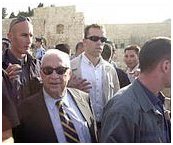 - Q: Many Israelis, if not the majority, are certain that you did not really mean to reach a peace agreement, and that you had planned the intifada in advance, and exploited Sharon's visit to the Temple Mount.
- Arafat: "I went myself with Abu Ala, Abu Mazen and Dr. Saeb Erekat to the house of Barak (in Kochav Yair). Amnon Shahak was there, Shlomo Ben-Ami was there, Yossi Ginosar, Gilad Sher, Danny Yatom and Danny Avraham. I begged him `Please remember what had been declared on Har Habayit by your hero Moshe Dayan, that which had been declared [regarding the ban on Jewish prayers on the Temple Mount]' ...
Why [Sharon] didn't make this visit when he was the second man after Netanyahu? Why he didn't make the visit during Begin? Why now?
Please. I begged him [Barak] in front of all the others. Please not to do it." ( By Akiva Eldar, Ha'aretz 20-6-2002)
The Mitchell rapport:
In late September 2000, Israeli, Palestinian, and other officials received reports that Member of the Knesset (now Prime Minister) Ariel Sharon was planning a visit to the Haram al-Sharif/Temple Mount in Jerusalem. Palestinian and U.S. officials urged then Prime Minister Ehud Barak to prohibit the visit. Mr. Barak told us that he believed the visit was intended to be an internal political act directed against him by a political opponent, and he declined to prohibit it.
Mr. Sharon made the visit on September 28 accompanied by over 1,000 Israeli police officers. Although Israelis viewed the visit in an internal political context, Palestinians saw it as highly provocative to them.... Thus began what has become known as the “Al-Aqsa Intifada”...
Mohammed Dahlan: Ehud Barak blocked
the attempts to reach agreement
 I took part in the Camp David talks in the summer of 2000 and was one of those who fought hardest to reach an agreement - indeed, I had to put up with accusations from others in the Palestinian delegation that I was too keen to reach a deal. But I was the first to refuse what had apparently been offered (apparently, because nothing was in writing). Contrary to subsequent claims, there was no serious offer made at Camp David, no solution floated that we would have regretted passing up.
The talks at Taba four months later, where there was a serious dialogue, were a different matter. If we had been offered at Camp David the kind of outline package we reached at Taba, we could have had a deal. But Ehud Barak, the Israeli prime minister, blocked the attempts to reach agreement because Israeli elections were two weeks down the line. (The Guardian, 2-7-2002
Yossi Beilin: Ariel Sharon decided
to terminate the peace process
It is easy for many Israelis to cling to the belief that former Prime Minister Ehud Barak offered Yasir Arafat "everything" while Arafat answered him with the intifada. And indeed, Mr. Barak did make a considerable peace offer in July 2000 at the Camp David summit. However, it must also be remembered that by December 2000, Mr. Arafat had agreed to the Clinton peace plan, as did Mr. Barak. Both men did so with reservations, and this act of compromise occurred at the height of the intifada.
But instead of accepting the successful talks that had taken place between Israel and the Palestinians at Taba in Egypt in January 2001 as a way toward a final settlement, Ariel Sharon decided, after being elected prime minister, to terminate the peace process. He has never concealed his opinion that the Oslo process was wrong. So he brought it to an end with the help of Shimon Peres and the Labor Party. (Yossi Beilin, New York Times, 30-3-2002)
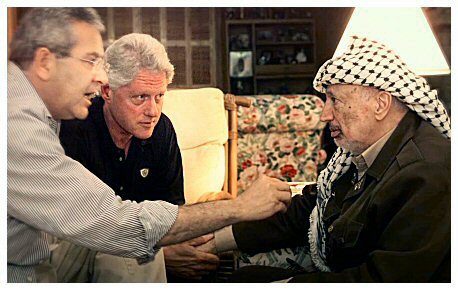
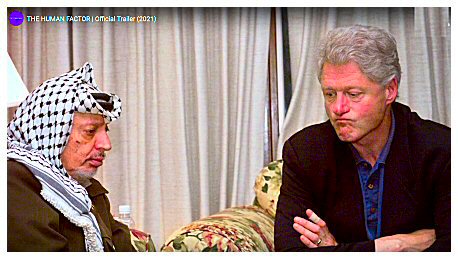
 Former President Bill Clinton on Saturday claimed “ I killed myself to give the Palestinians a state”, and maintained that he secured an agreement, which the Palestinians turned down.
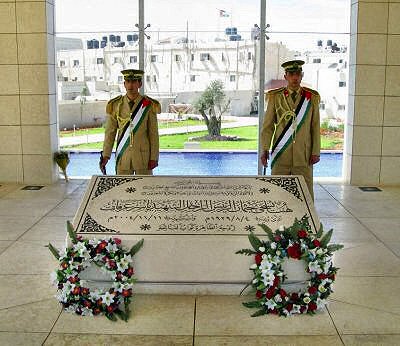 Dear Mr. President: I know it still grates on you that despite your best efforts you could not bring off a conclusive peace agreement between the Israelis and the Arabs, but I do regret you using the occasion of Yasir Arafat's death to blame him for the failure.